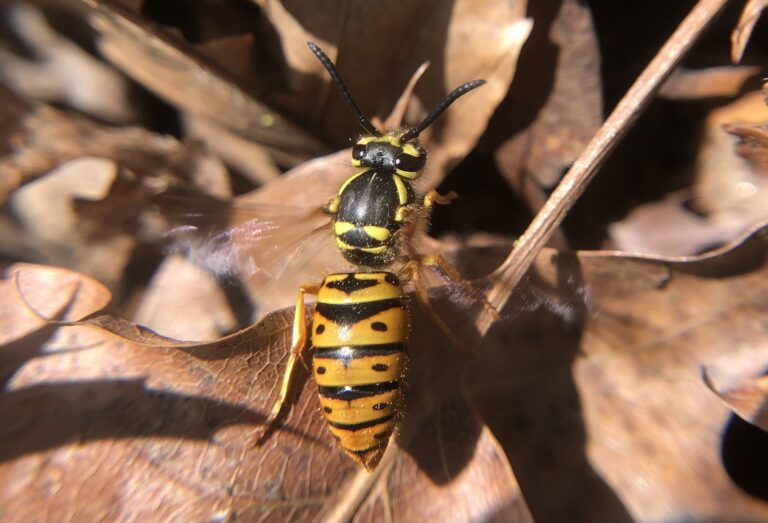
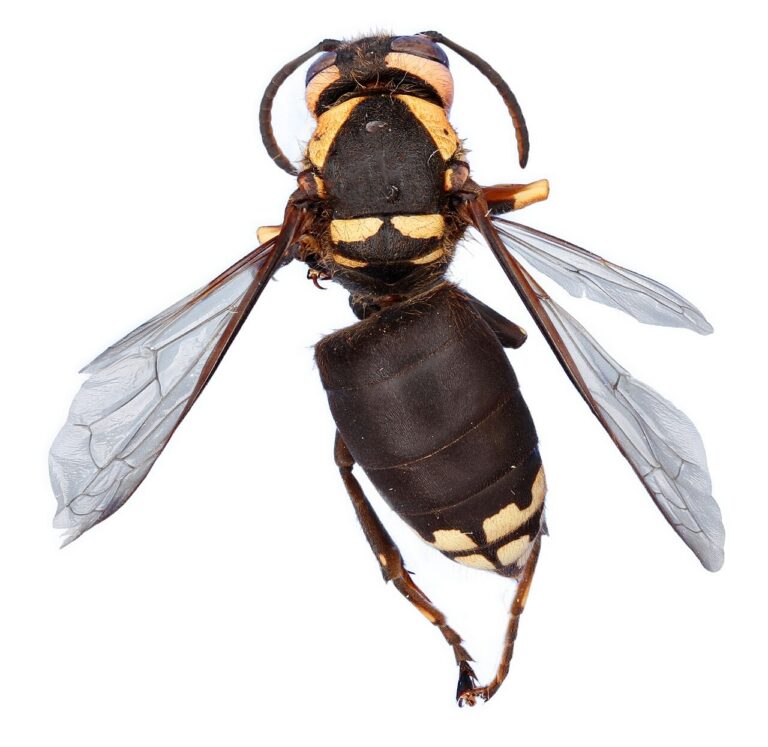
How to identify it
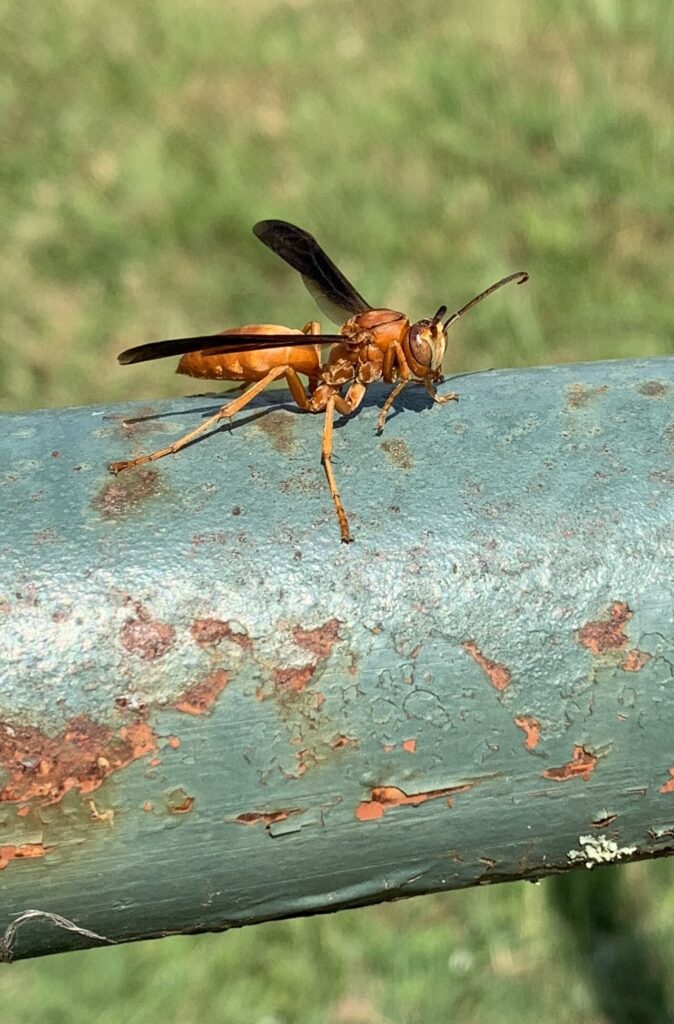
Look for a slender, rusty-red wasp with smoky wings and long legs that hang down in flight. The red paper wasp (Polistes carolina) is native to the region. Several paper wasps share that rusty color, so look at the body shape and nest together.
The nest is an open, umbrella-shaped paper comb attached by a short stalk. From a safe distance, you may be able to see the six-sided cells on the underside.
Signs of activity
Watch from the ground for several wasps returning to the same sheltered spot. New nests often start small in spring and grow as more workers emerge.
- Check beneath porch roofs, eaves, awnings and deck railings from a distance.
- Look for wasps repeatedly landing on an exposed gray comb or entering the same gap in siding or trim.
- Note whether activity is concentrated near a doorway, handrail, seating area or other busy spot.
Potential concerns
Workers hunt caterpillars to feed their young and help control garden pests. They may sting if someone bumps the nest or gets too close, especially during work around porch rails, shutters or roof edges. Paper wasps can sting more than once.
Prevention tips
Make a habit of looking up from the ground before using a ladder, trimming shrubs or moving outdoor furniture.
- Repair torn window screens and keep exterior doors closed when practical.
- Seal unused gaps around siding or trim after confirming that no wasps are actively using them.
- Pause work near a suspected nest, keep children and pets clear, and use another route if you can.
When to call a professional
Arrange a Pest Genie USA inspection if wasps repeatedly enter a wall opening or a nest is close to a walkway, play area or entrance. Leave the nest undisturbed and tell the technician exactly where you see wasps entering or landing.
A nest well away from people can often be left alone, especially if you can avoid the area.