How to identify it
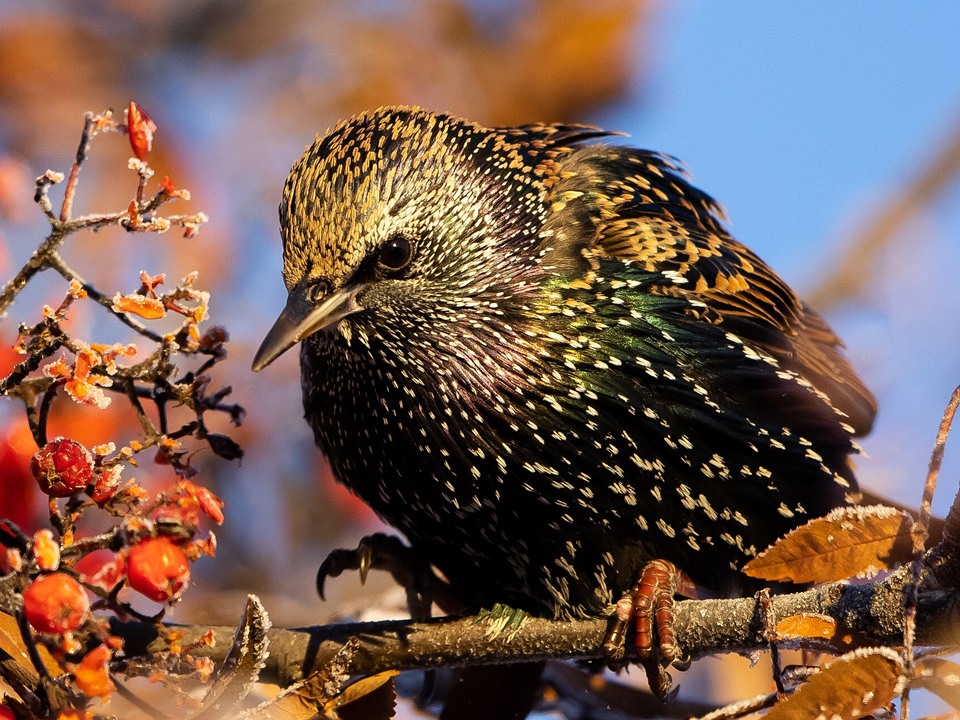
European starlings are stocky, robin-sized songbirds with short tails and long, pointed bills. Adults usually show glossy dark plumage with green or purple sheen and a yellow bill in spring. In fall and winter, pale spots stand out against darker feathers, and the bill darkens. Young birds are mostly plain gray-brown.
- Short, pointed wings and a short tail give flying starlings a compact shape.
- Starlings often forage on lawns and roost in groups on trees, wires, or buildings.
- The European Starling is introduced and documented in both Carolinas.
Signs of activity
- Birds repeatedly flying into the same vent, soffit gap, or roof opening, sometimes carrying grass or other nesting material.
- Chattering or calls from a wall, soffit, or vent.
- Droppings collecting below ledges, rooflines, or trees used by a roost.
- Flocks gathering at dusk or leaving the same roost around dawn.
Potential concerns
Nest material can restrict airflow in dryer or exhaust vents. Large roosts can cause persistent noise and leave droppings on walkways, siding, and equipment. Starlings also compete with native birds for nest cavities.
Prevention tips
- Check vents, soffits, and roof edges for loose covers and gaps. Arrange repairs after confirming the opening is empty.
- Use vent covers designed for the equipment. Keep dryer exhausts clear of lint and use a dryer-rated cover.
- Secure garbage and remove spilled birdseed or pet food near the building.
- Leave an active or unidentified nest undisturbed until a wildlife professional identifies the species and checks for eggs or young.
When to call a professional
Schedule an inspection if birds repeatedly enter a vent or roof opening, you hear activity inside a wall, or droppings keep building up below a roost. A technician can identify the bird, locate entry points, and recommend exclusion and cleanup options. If you suspect a dryer vent is blocked, stop using the dryer until the vent has been checked and cleared.