How to identify it
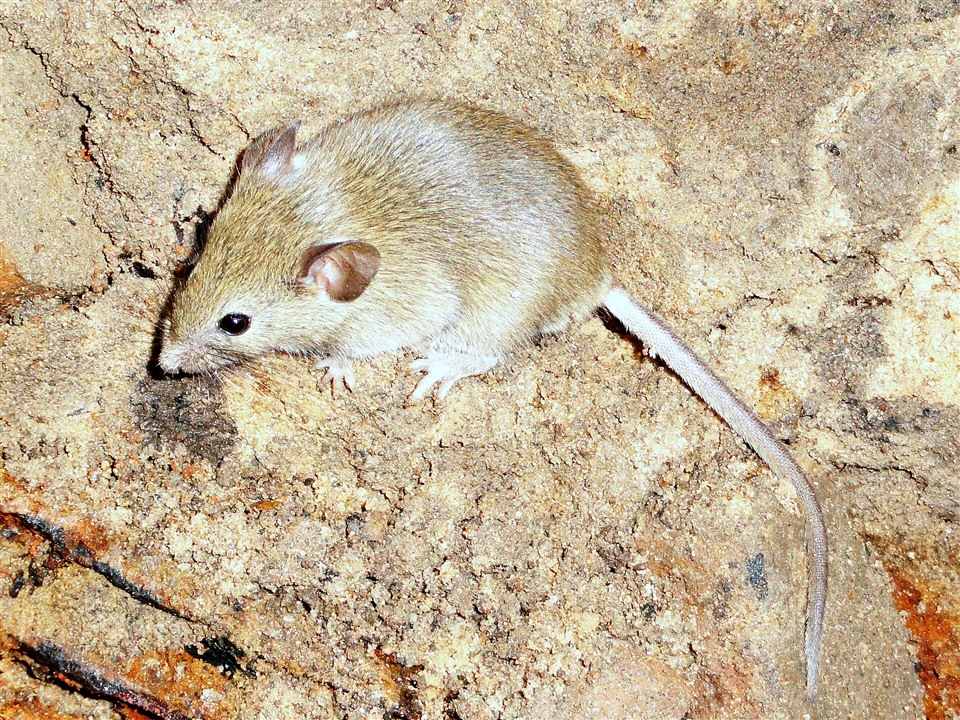
The house mouse (Mus musculus) is an introduced rodent established in North and South Carolina. An adult is about 3 to 4 inches long from nose to tail base. Look for gray-brown fur, a pointed snout, rounded ears, and a thin tail roughly as long as the head and body combined.
- The tail is sparsely haired and usually has a fairly even color. Deer mice often have a sharply white underside and a noticeably two-toned tail.
- House mice are active mostly at night and tend to travel along walls and cabinet edges.
- Indoors, they may use shredded paper, cloth, or insulation to make nests in sheltered areas near food.
Signs of activity
Check cabinets, utility openings, and the spaces behind appliances for clues.
- Small, dark, tapered droppings along baseboards, beneath sinks, or in pantry corners.
- Fresh gnaw marks on stored food packages, cardboard, or the edges of an opening.
- Shredded nesting material behind appliances, inside stored boxes, or in wall voids.
- Scratching or scurrying behind cabinets or inside walls, especially after dark.
Potential concerns
House mice can contaminate food and food-preparation surfaces with droppings and urine. They can also damage stored goods, insulation, and wiring.
- Discard food in packages that show gnawing or contamination.
- Avoid sweeping or vacuuming dry droppings or nesting material.
- If you find chewed electrical wiring, keep clear of it and have a qualified electrician inspect it.
Prevention tips
Focus on the openings mice use and the food and shelter they find indoors.
- Inspect gaps under exterior and garage doors, around pipes and utility lines, and where siding meets the foundation. A mouse can fit through an opening about 1/4 inch wide.
- Fit snug door sweeps and close gaps with rodent-resistant materials, such as metal mesh or sheet metal, as appropriate.
- Store dry foods, pet food, and birdseed in tightly closed containers. Clean up crumbs and remove pet food that sits out overnight.
- Reduce clutter along walls and check stored boxes and cabinets periodically for fresh signs.
When to call a professional
Schedule a Pest Genie USA inspection if fresh droppings keep appearing, noises recur inside walls, or you find damaged food packages or gnawed wiring. Tell the technician where and when you noticed activity. The inspection can identify likely entry points and guide a plan to address activity indoors and prevent reentry.