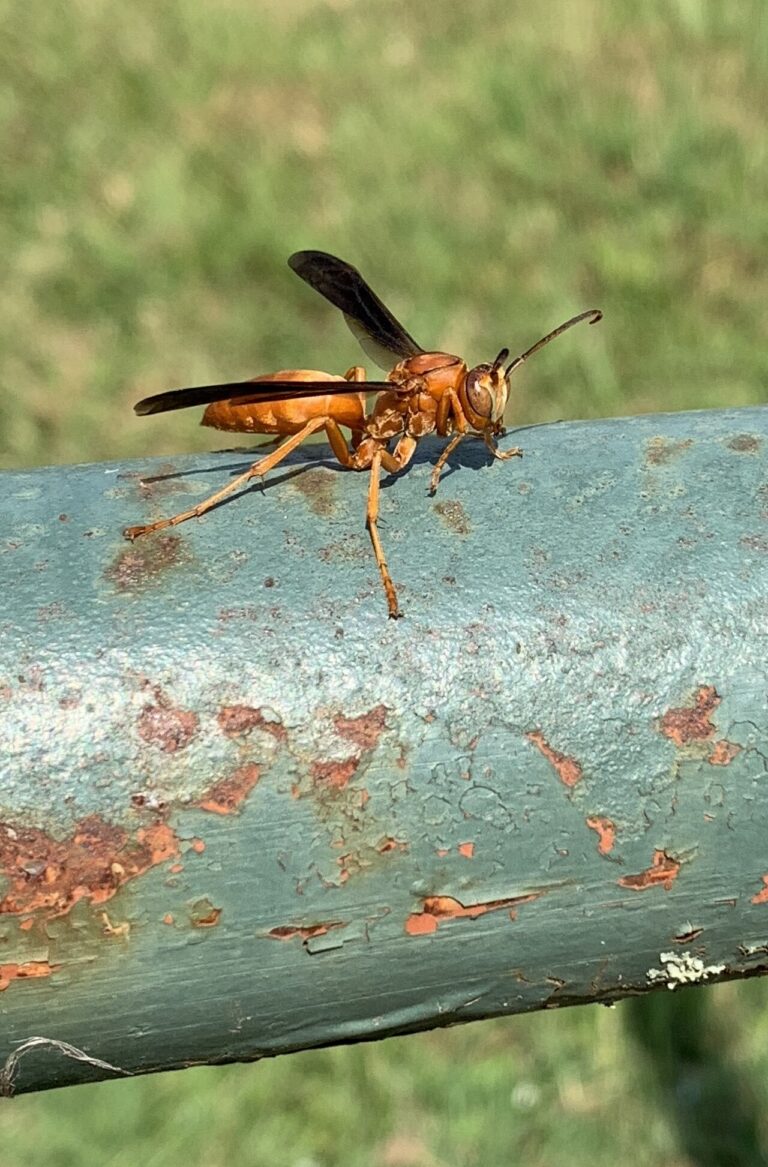
How to identify it
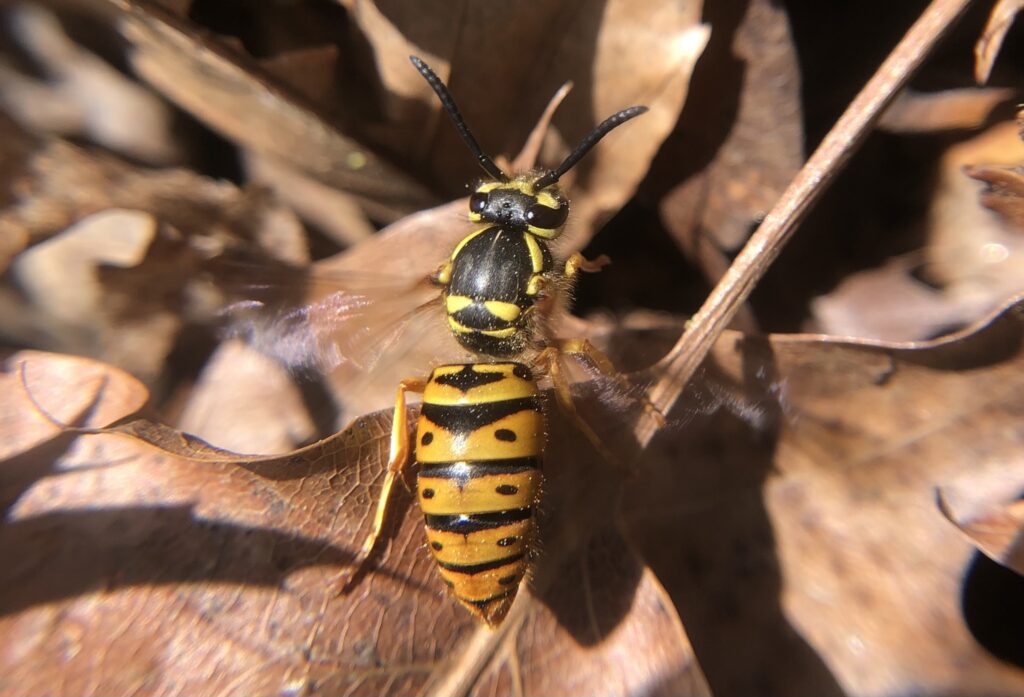
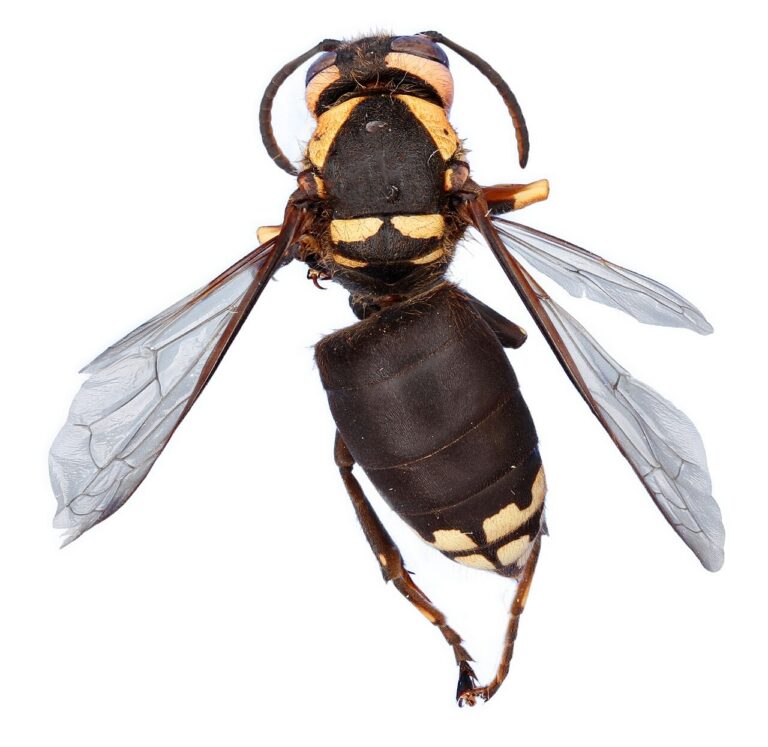
Eastern yellowjacket workers are roughly half an inch long, with a narrow waist and bold black and yellow bands on the abdomen. Several yellowjacket species look similar, so body markings and nest location help with identification.
Signs of activity
- Wasps repeatedly flying into and out of the same hole in the ground.
- Regular traffic through a gap in siding, an eave, or another opening into a building cavity.
- Yellowjackets gathering around outdoor food, sweet drinks, fallen fruit, or uncovered trash.
Potential concerns
Workers defend the nest if it is disturbed and can sting more than once. Hidden nests near lawns, paths, or entrances can be disturbed during everyday activity. Stings can cause a serious allergic reaction in people sensitive to the venom.
Prevention tips
- Cover outdoor food and drinks, and clear fallen fruit and spills.
- Use tight-fitting lids on trash and recycling bins.
- Watch for concentrated wasp traffic before mowing or trimming, and keep people and pets away from a suspected nest.
- Seal gaps around siding and other openings after confirming there is no active nest inside.
When to call a professional
Arrange an inspection if wasps repeatedly enter one opening, an active nest is near a walkway or play area, or you suspect a nest inside a wall. Leave the opening undisturbed so a professional can locate the colony and assess it safely.