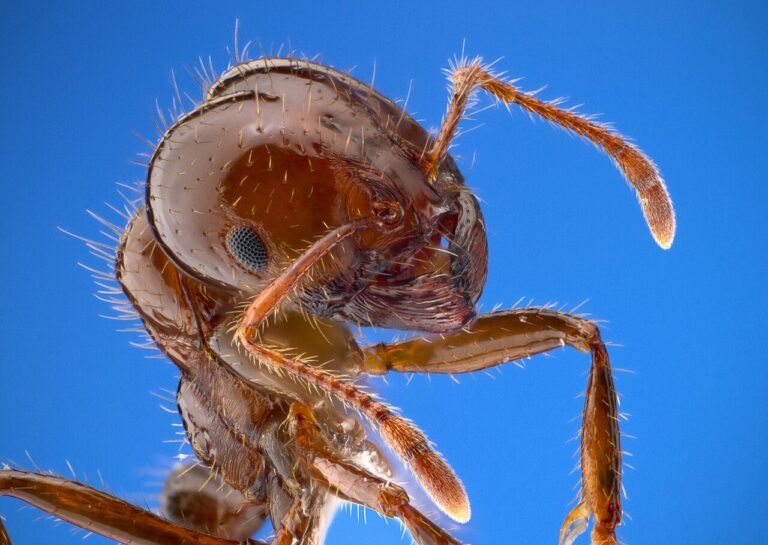
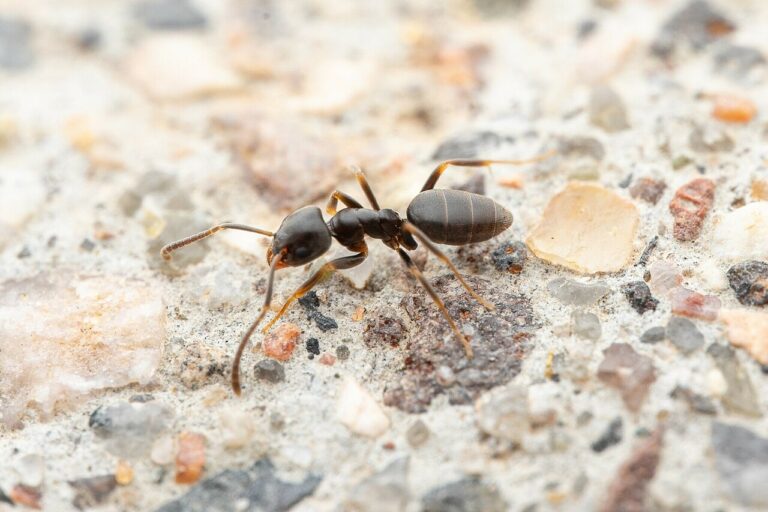
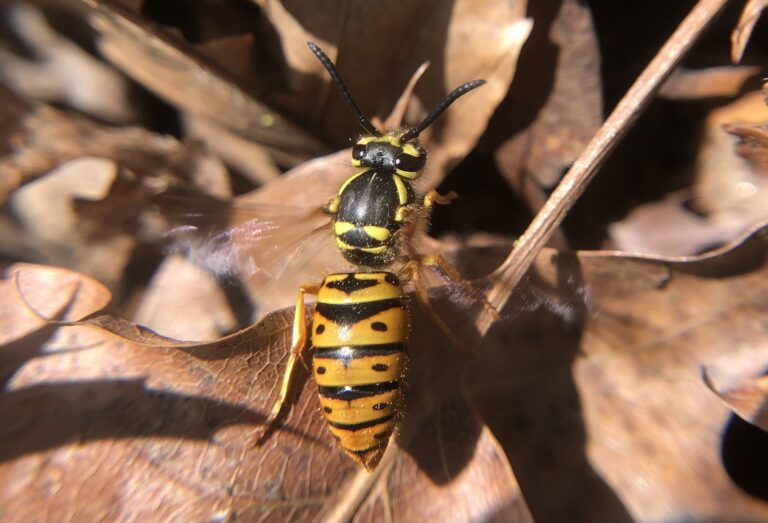
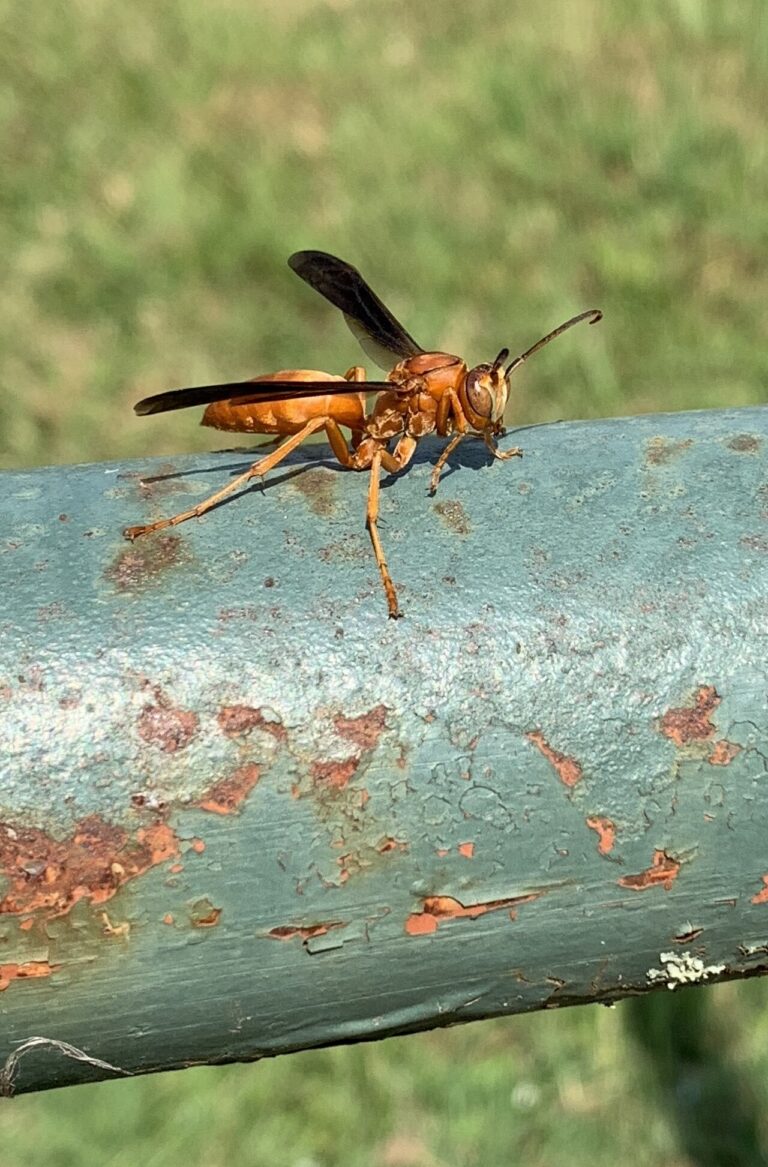
How to identify it
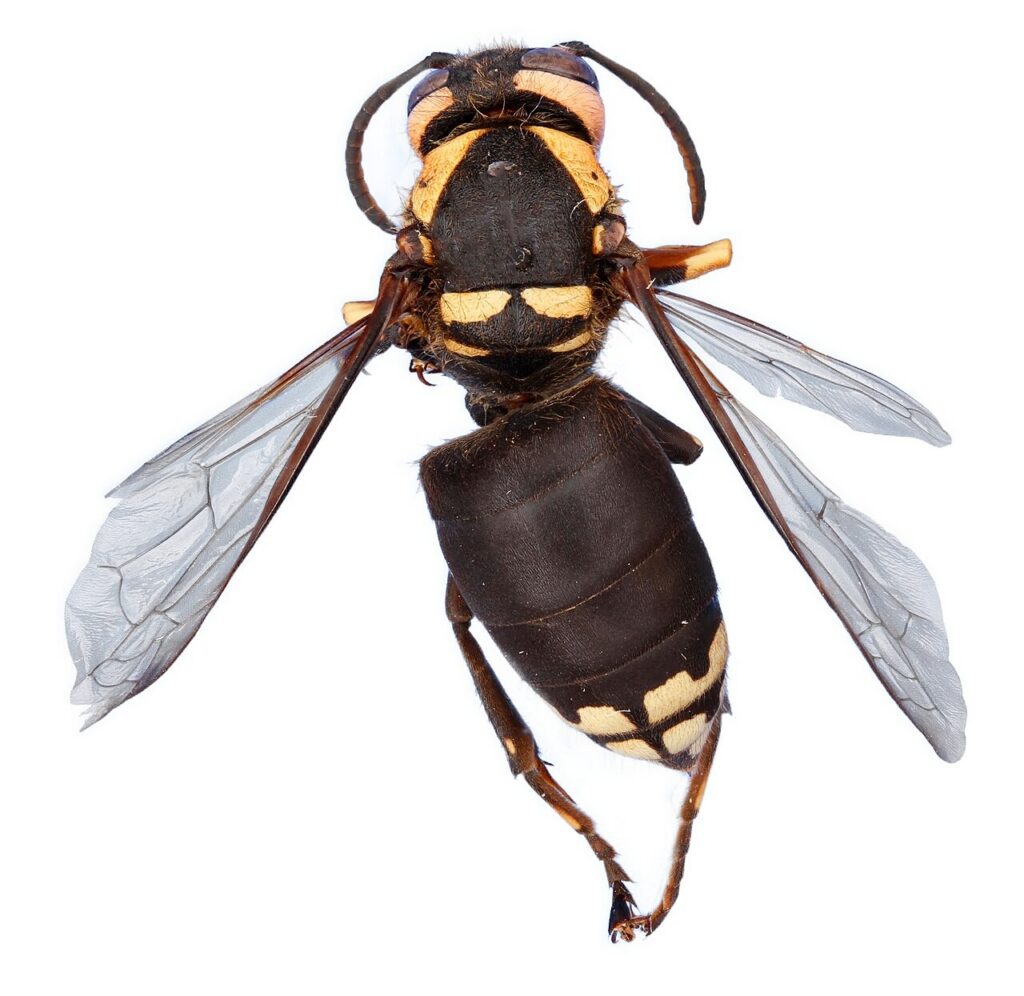
The bald-faced hornet (Dolichovespula maculata) is a stocky, mostly black social wasp with an ivory-white face and white markings near the tip of the abdomen. Adult workers vary in size, so the markings are a more useful clue than length alone.
Look for an enclosed, pear-shaped nest with a gray, layered paper shell. The colony builds the shell from chewed fibers and usually uses a single opening near the bottom.
Signs of activity
Watch from a distance for wasps repeatedly returning to one opening. Nests often hang from tree branches, shrubs or eaves, and foliage can hide them.
- Check for a gray paper nest under an overhang or in a hedge near a walkway.
- Look for a steady flight path toward one spot, even when the nest itself is hard to see.
- A few hornets visiting flowers or fallen fruit may be foraging. Repeated trips to the same opening are a better sign of a nearby nest.
Potential concerns
Workers defend an active nest and can sting repeatedly. A nest beside a doorway, play area or hedge is easier to disturb during everyday activities such as mowing, trimming or walking past.
Prevention tips
Check shrubs and eaves from a distance before trimming, mowing nearby or setting up a ladder.
- Keep people and pets away from a suspected nest and use another route.
- Cover outdoor food and drinks, clean up sugary spills and keep trash bins closed.
- Pause yard work near steady hornet traffic. Give the nest space and leave the surrounding branches undisturbed.
When to call a professional
Arrange a Pest Genie USA inspection if a nest is near an entrance, walkway or area where people work or play. Leave it undisturbed and tell the technician where you see hornets entering and leaving.
A nest well away from everyday activity can often be left alone. Bald-faced hornets prey on other insects, and colonies usually die out when cold weather arrives.